
Rhino sighting chances Ngorongoro, The Ngorongoro Crater in Tanzania is one of Africa’s most iconic wildlife destinations. As a UNESCO World Heritage Site and part of the Ngorongoro Conservation Area, this massive volcanic caldera is home to an astonishing concentration of wildlife, including the Big Five (lion, leopard, elephant, buffalo, and rhino). Among these, the black rhinoceros (Diceros bicornis) is the most elusive and highly sought-after species.
But what are the actual chances of spotting a rhino in the Ngorongoro Crater? Given their critically endangered status and the vastness of the crater, seeing one requires a mix of luck, timing, and knowledge of their behavior. This article explores the factors influencing rhino sightings, their population in the crater, and tips for maximizing your chances of encountering these magnificent creatures.
Rhinos were once abundant across East Africa, but rampant poaching in the 20th century decimated their numbers. By the 1990s, black rhinos were nearly extinct in the wild, with fewer than 2,500 individuals remaining globally.
In Ngorongoro, rhino populations suffered heavily due to poaching, dropping from over 100 in the 1960s to just a handful by the 1990s. Thanks to rigorous anti-poaching efforts and conservation programs, the population has slowly recovered.
As of recent estimates, there are between 20 to 30 black rhinos in the Ngorongoro Crater. While this number is small, the crater’s enclosed environment makes it one of the best places in Tanzania to see them in the wild.
The rhinos in Ngorongoro are part of a semi-captive breeding program, meaning they are closely monitored by rangers. They are fitted with transmitters to track their movements, reducing poaching risks and aiding research.
Rhinos are most active during early morning and late afternoon when temperatures are cooler. Dawn (6:00 AM – 9:00 AM) and dusk (4:00 PM – 6:30 PM) are the best times to spot them grazing or moving toward water sources.
Dry Season (June – October): The best time for wildlife viewing, as animals congregate around water sources. Rhinos are easier to spot near Lerai Forest or Mandusi Swamp.
Wet Season (November – May): Lush vegetation makes rhinos harder to see, but the crater is less crowded, offering a more exclusive safari experience.
Rhinos in Ngorongoro tend to favor specific areas:
Lerai Forest: A dense acacia woodland where rhinos seek shade.
Gorigor Swamp & Mandusi Swamp: Reliable water sources attract rhinos.
Open Grasslands: Occasionally, rhinos venture into the open, especially in the early morning.
Experienced safari guides communicate with rangers to track rhino movements. Since the animals are radio-collared, some guides receive real-time updates, increasing sighting chances.
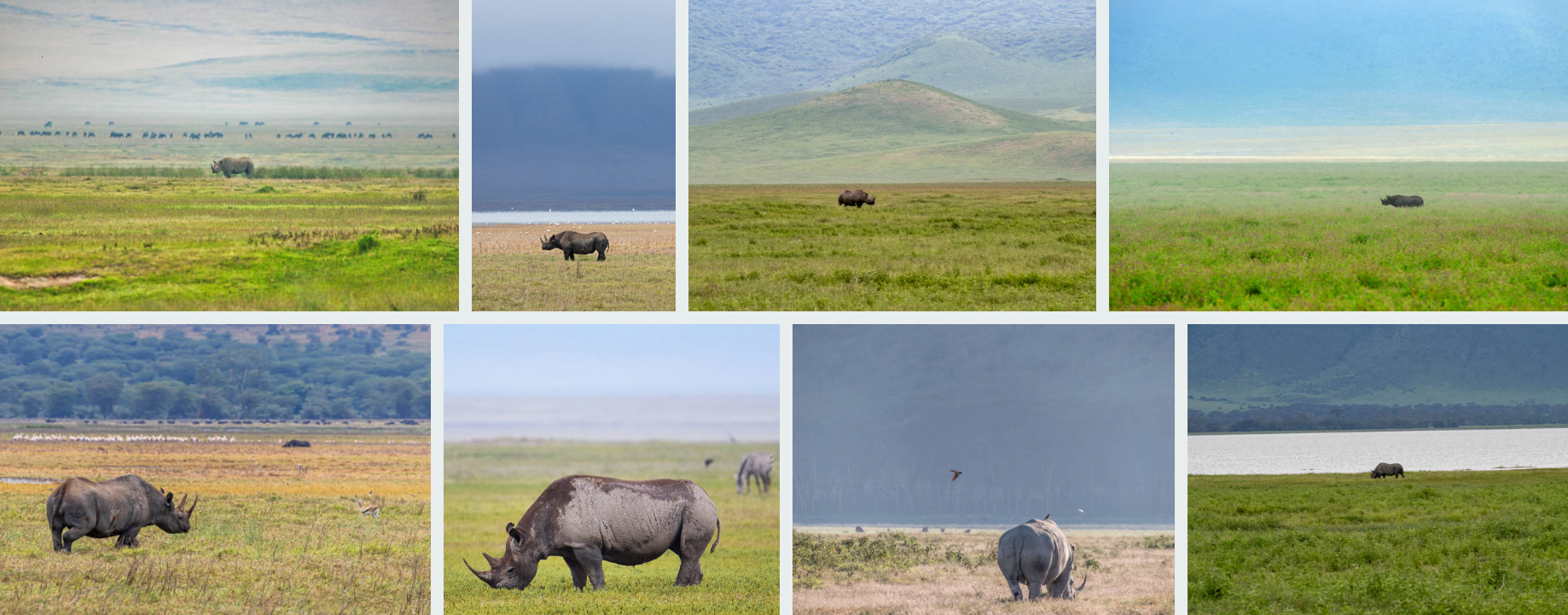
Statistically, the chances of spotting a rhino in Ngorongoro are moderate to high compared to other East African parks, but not guaranteed. Here’s a rough breakdown:
Serengeti National Park: Very low (fewer than 50 rhinos spread over 14,750 km²).
Ngorongoro Crater: Moderate to high (20-30 rhinos in 260 km²).
Private Reserves (e.g., Ol Pejeta, Kenya): Very high (protected sanctuaries with higher rhino densities).
In Ngorongoro, about 60-70% of visitors report seeing at least one rhino during their game drive. However, sightings are often distant, as rhinos are shy and keep their distance from vehicles. Close-up encounters are rare but possible.
Ngorongoro has one of the strongest anti-poaching units in Africa, with:
Armed rangers patrolling daily.
Aerial surveillance to monitor rhino movements.
Community involvement to reduce human-wildlife conflict.
Rhinos in Ngorongoro are part of a metapopulation management plan, where individuals are occasionally moved between parks to ensure genetic diversity.
Responsible tourism helps fund conservation. Park fees contribute to:
Ranger salaries.
Rhino tracking technology.
Habitat restoration.
However, too many vehicles can stress rhinos. The Ngorongoro Conservation Area Authority (NCAA) limits off-road driving to minimize disturbance.
Book a Full-Day Safari – More time in the crater increases your odds.
Hire a Knowledgeable Guide – Local guides know rhino hotspots.
Visit During Peak Hours – Early morning or late afternoon.
Bring Binoculars or a Zoom Lens – Rhinos are often seen from a distance.
Be Patient – Wildlife viewing is unpredictable.
Choose the Right Season – Dry season (June-October) is ideal.
While spotting a rhino is thrilling, it’s crucial to prioritize their well-being:
Keep a respectful distance (at least 30 meters).
Avoid loud noises or sudden movements.
Follow park rules (no off-roading near rhinos).
The chances of seeing a rhino in Ngorongoro Crater are relatively good compared to other Tanzanian parks, thanks to the small but stable population and concentrated habitat. While sightings are never guaranteed, visiting during optimal times, hiring an experienced guide, and exploring key rhino zones significantly improve your odds.
Beyond the thrill of seeing a rhino, Ngorongoro offers an unparalleled safari experience with its dense wildlife population and breathtaking landscapes. Whether or not you encounter a rhino, the crater’s beauty and biodiversity make it a must-visit destination for any wildlife enthusiast.
By supporting responsible tourism and conservation efforts, visitors contribute to the survival of these majestic creatures, ensuring future generations can also witness the wonder of rhinos in the wild.