
Tanzania Safari Birds, Tanzania is a birdwatcher’s paradise, boasting over 1,100 bird species—more than almost any other African country. From vibrant kingfishers to majestic raptors, Tanzania’s diverse ecosystems—including savannas, wetlands, forests, and mountains—provide habitats for both resident and migratory birds. Whether you’re a seasoned birder or a casual wildlife enthusiast, a Tanzania safari offers unparalleled avian diversity.
This guide explores the most remarkable bird species you can encounter, categorized by Tanzania’s prime birding destinations.
The Serengeti National Park is famous for the Great Migration, but it’s also home to more than 500 bird species. Some standout species include:
Appearance: Tall, long-legged raptor with an eagle-like body and crane-like legs.
Behavior: Hunts snakes and small mammals by stomping on them.
Best Spot: Open grasslands.
Appearance: One of the world’s heaviest flying birds, with a grayish-brown body and a distinctive neck pouch.
Behavior: Males perform dramatic courtship displays.
Best Spot: Short-grass plains.
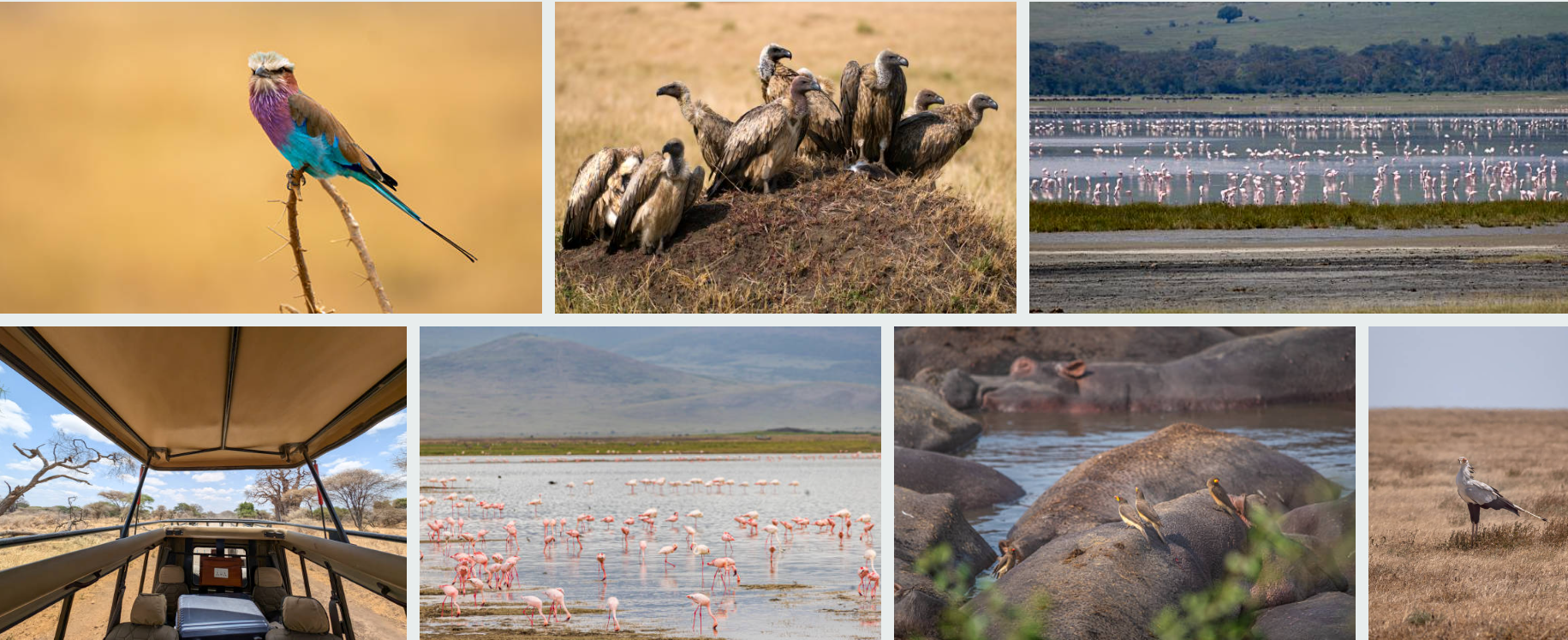
Appearance: Striking rainbow-colored bird with a lilac chest and turquoise wings.
Behavior: Perches on trees before diving for insects.
Best Spot: Common throughout the Serengeti.
Appearance: Large black bird with a red facial pouch and a deep booming call.
Behavior: Walks in groups, feeding on reptiles and insects.
Best Spot: Wooded savannas.
The Ngorongoro Crater is a UNESCO World Heritage Site and a haven for birdlife due to its permanent water sources. Key species include:
Appearance: Pink wading birds with long legs and curved bills.
Behavior: Filter-feeds on algae in soda lakes.
Best Spot: Lake Magadi (Lesser Flamingos) and Empakaai Crater (Greater Flamingos).
Appearance: Red-tailed hawk-like raptor with a white belly.
Behavior: Soars high before diving on prey.
Best Spot: Crater rim and open areas.
Appearance: Elegant bird with a golden crown and white cheeks.
Behavior: Performs elaborate mating dances.
Best Spot: Marshy areas near Lerai Forest.
Appearance: Bright green with a red crest and white-tipped tail.
Behavior: Feeds on fruits in dense forests.
Best Spot: Crater’s forested slopes.
Lake Manyara National Park is a birding hotspot with over 400 species, thanks to its alkaline lake and groundwater forests.
Appearance: Smaller than the Great White Pelican, with a pinkish back.
Behavior: Feeds on fish in shallow waters.
Best Spot: Lakeshore.
Appearance: Iconic raptor with a white head and a piercing call.
Behavior: Plucks fish from the water with its talons.
Best Spot: Perched on lakeside trees.
Appearance: Large black-and-white hornbill with silvery cheeks.
Behavior: Feeds on figs and insects in woodlands.
Best Spot: Forest canopies.
Appearance: White stork with a bright yellow bill.
Behavior: Wades in water, stirring mud to catch fish.
Best Spot: Lake edges.
Tarangire National Park is best known for elephants but also hosts over 550 bird species, especially during the dry season when birds congregate around the Tarangire River.
Appearance: Small green parrot with a yellow neck.
Behavior: Flocks noisily around baobab trees.
Best Spot: Riverine forests.
Appearance: Black-and-white hornbill with a red bill (male) or black bill (female).
Behavior: Feeds on insects and fruits.
Best Spot: Dry woodlands.
Appearance: World’s largest bird, with long legs and a long neck.
Behavior: Runs at speeds up to 70 km/h.
Best Spot: Open plains.
Appearance: Metallic blue-black bird with yellow eyes.
Behavior: Endemic to Tanzania, often seen in acacia woodlands.
Best Spot: Around Silale Swamp.
Southern Tanzania’s Selous Game Reserve and Ruaha National Park are less visited but offer unique species.
Appearance: Large, rufous-colored owl.
Behavior: Nocturnal hunter of fish and crabs.
Best Spot: Riverbanks in Selous.
Appearance: Black-and-white bird with a unique lower-longer-than-upper bill.
Behavior: Skims water to catch fish.
Best Spot: Sandbanks along the Rufiji River.
Appearance: Similar to Von der Decken’s but with a red bill.
Behavior: Endemic to central Tanzania.
Best Spot: Ruaha’s miombo woodlands.
Appearance: Green and blue with a rufous throat.
Behavior: Catches insects mid-flight.
Best Spot: Riverine forests in Selous.
Tanzania hosts European and Asian migrants during the rainy season, including:
European Roller (Coracias garrulus)
Yellow Wagtail (Motacilla flava)
Eurasian Bee-eater (Merops apiaster)
Tanzania’s birdlife is as diverse as its landscapes, from the flamingo-filled lakes to the raptor-rich savannas. Whether you explore the Serengeti, Ngorongoro, or remote Selous, each park offers unique sightings. With proper binoculars and a knowledgeable guide, your Tanzania safari will be an unforgettable birding adventure.